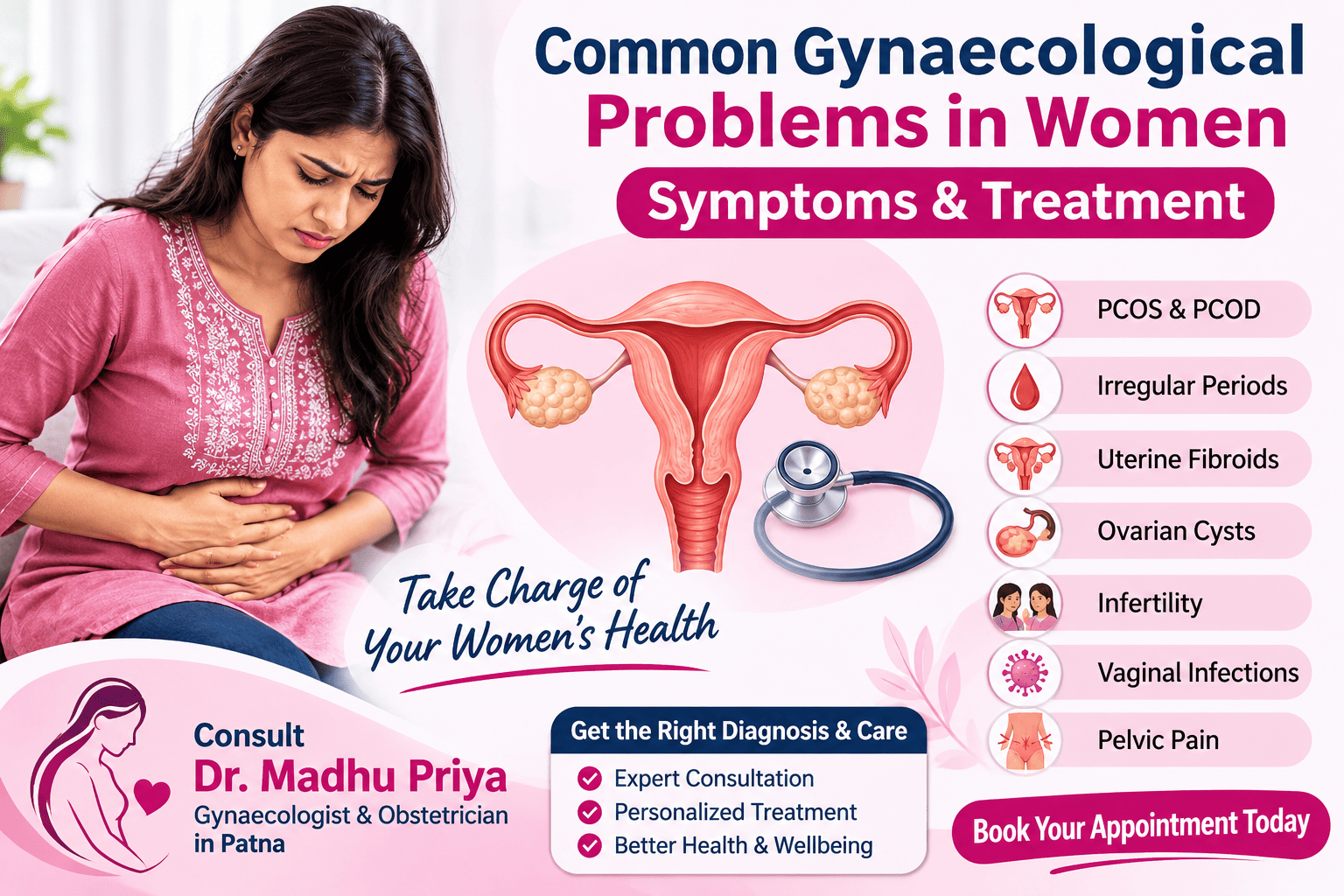
Common Gynaecological Problems in Women: Symptoms, Causes and Treatment
Women’s health is an important part of overall well-being. Throughout life, women may experience different gynaecological problems related to menstruation, hormones, pregnancy, reproductive organs, and vaginal health. Some problems are temporary, while others may require proper medical evaluation and treatment.
Understanding the symptoms of common gynaecological diseases can help women seek timely medical care. If you are experiencing irregular periods, pelvic pain, unusual vaginal discharge, or difficulty conceiving, consulting a qualified gynaecologist can help identify the underlying cause.
If you are looking for a gynaecologist in Patna, Dr. Madhu Priya provides consultation for various women’s health and reproductive health concerns.
1. PCOS and PCOD – Hormonal Problems in Women
Polycystic Ovary Syndrome (PCOS) is a common hormonal condition that can affect menstrual cycles, ovulation, and metabolism. Women with PCOS may experience irregular periods, acne, excessive facial hair, weight changes, and difficulty getting pregnant.
Common symptoms of PCOS:
- Irregular or missed periods
- Excessive facial or body hair
- Acne and oily skin
- Weight gain or difficulty managing weight
- Hair thinning
- Difficulty conceiving
Treatment: Treatment depends on symptoms and pregnancy goals. It may include lifestyle changes, weight management where appropriate, and medicines to regulate periods or support ovulation.
2. Irregular Periods and Menstrual Disorders
Irregular periods are a common concern among women of reproductive age. Menstrual changes may occur due to hormonal imbalance, PCOS, thyroid disorders, stress, significant weight changes, or other medical conditions.
Common symptoms:
- Periods occurring too frequently or infrequently
- Missed menstrual cycles
- Heavy menstrual bleeding
- Very painful periods
- Unexpected bleeding between periods
Treatment: A gynaecologist may recommend hormonal tests, ultrasound examinations, or other investigations depending on the symptoms. Treatment is based on the underlying cause.
3. Uterine Fibroids – Causes, Symptoms and Treatment
Uterine fibroids are non-cancerous growths that develop in or around the uterus. Some women have no symptoms, while others experience menstrual problems or pelvic discomfort.
Common symptoms:
- Heavy or prolonged periods
- Pelvic pain or pressure
- Lower abdominal swelling
- Frequent urination
- Back pain
- Difficulty conceiving in some cases
Treatment: Depending on the size, location, symptoms, and pregnancy plans, treatment may include observation, medication, or procedures such as myomectomy. Hysterectomy may be considered in selected cases.
4. White Discharge and Vaginal Infections
Vaginal discharge is a normal part of reproductive health. However, changes in its colour, smell, consistency, or quantity may indicate an infection or another medical condition.
Possible warning signs:
- Unusual or foul-smelling discharge
- Vaginal itching or irritation
- Burning sensation during urination
- Vaginal redness
- Pain during sexual intercourse
Treatment: Causes may include fungal infections, bacterial vaginosis, or sexually transmitted infections. A doctor may recommend an examination or laboratory testing before prescribing suitable treatment.
Avoid self-medication or using vaginal washes without medical advice.
5. Ovarian Cysts – Symptoms and Treatment
Ovarian cysts are fluid-filled sacs that develop in or on the ovaries. Many cysts are harmless and disappear without treatment, but some may require medical monitoring or surgery.
Common symptoms:
- Lower abdominal pain
- Pelvic pressure
- Bloating
- Pain during intercourse
- Changes in menstrual cycles
- Frequent urination
Treatment: Pelvic ultrasound and clinical evaluation help determine the nature of the cyst. Treatment may involve observation, follow-up scans, medication for associated symptoms, or surgery when necessary.
Sudden severe pelvic pain, particularly with vomiting or faintness, requires urgent medical attention.
6. Endometriosis – A Cause of Pelvic Pain
Endometriosis is a condition in which tissue similar to the uterine lining grows outside the uterus. It can cause inflammation, pain, and fertility problems in some women.
Common symptoms:
- Severe menstrual cramps
- Chronic pelvic pain
- Pain during intercourse
- Pain during bowel movements or urination during periods
- Difficulty conceiving
Treatment: Depending on the severity and pregnancy plans, management may include pain-relieving medicines, hormonal treatment, or laparoscopic surgery in selected cases.
7. Female Infertility and Difficulty Conceiving
Infertility refers to difficulty achieving pregnancy after a period of regular, unprotected intercourse. It can be associated with ovulation problems, PCOS, blocked fallopian tubes, endometriosis, age-related changes, or male reproductive factors.
Possible contributing factors:
- Irregular ovulation
- Hormonal imbalance
- Blocked fallopian tubes
- Uterine abnormalities
- Endometriosis
- Male fertility problems
Treatment: Fertility evaluation may include hormonal tests, pelvic ultrasound, fallopian tube assessment, and semen analysis. Treatment depends on the cause and may include ovulation induction, IUI, or IVF where appropriate.
Both partners should be evaluated when infertility is suspected.
8. Pelvic Inflammatory Disease (PID)
Pelvic Inflammatory Disease is an infection involving the female reproductive organs, often associated with sexually transmitted bacteria.
Common symptoms:
- Lower abdominal or pelvic pain
- Abnormal vaginal discharge
- Fever
- Pain during intercourse
- Bleeding between periods
Treatment: Early diagnosis and appropriate antibiotics are important. Untreated PID can cause complications, including chronic pelvic pain and fertility problems.
When Should You Consult a Gynaecologist?
You should consider consulting a gynaecologist if you experience:
- Repeatedly irregular menstrual cycles
- Heavy or painful periods
- Unusual vaginal discharge
- Persistent lower abdominal pain
- Vaginal itching or burning
- Difficulty getting pregnant
- Bleeding after menopause
- Repeated pregnancy loss
Seek urgent medical attention for severe abdominal pain, heavy bleeding, fainting, or fever with pelvic pain.
Why Choose Dr. Madhu Priya for Women’s Healthcare in Patna?
Dr. Madhu Priya is a Gynaecologist and Obstetrician in Patna who provides consultation for women’s reproductive health and pregnancy-related concerns.
Women can seek consultation for PCOS, irregular periods, uterine fibroids, ovarian cysts, infertility, menstrual disorders, vaginal infections, and other gynaecological conditions.
The recommended treatment depends on the patient’s symptoms, medical history, examination findings, and diagnostic reports. Individualised medical guidance helps women understand their health concerns and available treatment options.
Book Your Gynaecology Consultation in Patna
Ignoring persistent gynaecological symptoms may delay diagnosis and appropriate treatment. Regular medical consultations and timely investigations are important for maintaining reproductive and overall health.
If you are searching for a Best Gynaecologist in Patna, consult Dr. Madhu Priya for women’s healthcare and gynaecological evaluation.
Doctor: Dr. Madhu Priya – Gynaecologist and Obstetrician
Address: Patliputra Path, Near Ganpati Utsav Hall, Rajendra Nagar, Patna, Bihar – 800016.
Contact: 9304956487
Website: https://gynepatna.in/
Frequently Asked Questions
1. What are the most common gynaecological problems in women?
Common problems include PCOS, irregular periods, uterine fibroids, ovarian cysts, vaginal infections, endometriosis, and infertility.
2. Can hormonal imbalance affect menstrual cycles?
Yes. Hormonal conditions involving the thyroid, prolactin, or reproductive hormones can affect menstrual regularity.
3. Are ovarian cysts dangerous?
Most ovarian cysts are benign and resolve naturally. However, some require monitoring or treatment depending on their size, appearance, and symptoms.
4. Can PCOS affect pregnancy?
Yes. PCOS can interfere with regular ovulation and make conception difficult. Appropriate treatment can help many women with PCOS achieve pregnancy.
5. When should I visit a gynaecologist?
Consult a gynaecologist for persistent menstrual irregularities, unusual vaginal discharge, pelvic pain, fertility concerns, or abnormal bleeding.
Medical Disclaimer: This article is for general educational purposes only. It does not replace medical examination, diagnosis, or treatment by a qualified healthcare professional.